Water
Paddleboarding
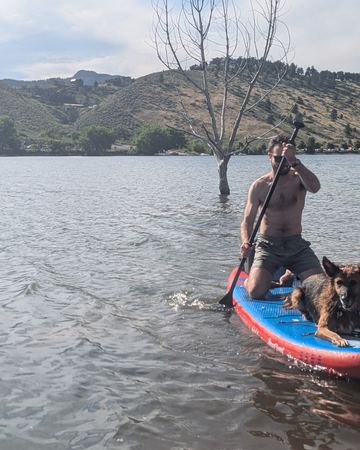
When I'm home in Austin, I paddleboard.
Security engineer. Austin, Texas.
Eight years in IT: endpoint support, then networking, then security. I work on identity and access, detection and response, and security automation. Army infantry before that.
Email me Book a 30-minute call (opens in a new tab)
Certified Security+ · CCNA · Okta Certified Administrator · all six
A note on the domain. I was born Andrey Kontarev Sergeevich, in Ukraine. In 1998, when I was three, I was adopted and renamed Joseph Whittle. So the site lives at the name I started with, and the person on it goes by Joe. The rest of the story is better over coffee — say hello.
I was an infantry team leader in the U.S. Army from 2015 to 2017. In 2018 I took an IT associate job at FloSports in Austin, looking after 500-plus endpoints. Two years later I was building and running the company's network, and the year after that I moved into security, where I stayed until 2025. Since then I've worked contracts: security automation at Arctiq, and now information security at a healthcare technology company.
At FloSports I owned identity and access for 150+ applications, ran detection and response, and led CIS 18 adoption from no formal controls. At Arctiq I built SOAR playbooks and the telemetry pipelines feeding Google Chronicle for MSSP alert triage.
Newest first, grouped by type of work.
Current
Oct 2025 – Jan 2026
Mar 2021 – May 2025
Mar 2020 – Mar 2021
Mar 2018 – Mar 2020
Apr 2015 – Dec 2017
A full résumé is available on request.
AtlasIT. A multi-tenant compliance platform that replaces manual control audits with an automated pipeline: control mapping, evidence collection, and posture reporting for organizations that don't have security staff. Tenant isolation and least-privilege API scoping are enforced at the edge. Cloudflare Workers, Hono, D1; React and TypeScript.
A Whittle Wandering. Telemetry from the 2025 road trip, ingested, normalized, and mapped. Secrets live in a vault rather than in source, ingestion is schema-validated, and logging is structured. Cloudflare Workers, D1, KV, R2; React and Mapbox.
I take contract work, remote. These four come up most.
Okta and Entra ID cleanup. Find out who can reach what, fix joiner-mover-leaver gaps, cut standing admin rights, and put apps behind SSO and SCIM where they support it. I've owned identity for 150+ applications.
Detection and SOAR playbooks. Tune noisy detections, write triage and response playbooks, and get the right telemetry into the SIEM. Splunk, Google Chronicle, CrowdStrike.
CIS 18 baseline. Start from where you are, including no formal controls: benchmarks, a gap assessment, and a phased plan your team can run.
Network hardening. Review switching, routing, wireless, and segmentation, then close what shouldn't be reachable. I built and ran a 40,000 sq ft Cisco network before I moved into security.
It starts with a 30-minute call to see if it fits. Then I write up the scope and deliverables before any work starts.
Book a time (opens in a new tab)
Or email howdy@andreysergeevich.me.
Three past jobs, with the names left out.
Before. An in-house security role at a company with no formal security controls.
Work. Measured where things stood against CIS 18 benchmarks, ran gap assessments, and wrote a phased plan to adopt the controls.
Result. The company had a control framework and a plan to work through it, instead of starting from nothing.
Before. Access spread across Active Directory, Microsoft Entra ID, and Okta, for more than 150 applications.
Work. Integrated those directories toward central access management, built joiner-mover-leaver workflows, and set least-privilege guardrails.
Result. One identity setup I owned end to end, where access was granted and removed through defined workflows.
Before. A managed security provider triaging alerts for many client environments, with telemetry from Entra ID, CrowdStrike, and a long list of other EDR platforms.
Work. Ran and automated the pipelines feeding that data into Google Chronicle, normalized ingestion and enrichment across tenants, and built SOAR playbooks with Splunk and Chronicle.
Result. Detection-and-response runbooks and incident response procedures standardized across clients.
October 2026
This site has a game, Sasha Fetch, with a weekly leaderboard. The game runs in your browser, so the browser can't be trusted with the score. Anyone can open the console and post whatever number they like. Here's what the server does about it.
Signed run tokens. When a run starts, the server hands out a token signed with HMAC-SHA256. It holds a random run ID, a seed, and the start time. A score only counts if it comes back with a valid token. Each token works once and expires after a few hours.
Sanity checks. The game can only produce points so fast. The server compares the score with the time since the token was issued and rejects anything the game couldn't have produced. Initials must be three letters, and request bodies have a size cap.
Turnstile. Posting a score goes through Cloudflare Turnstile, a bot check without puzzles. The cheap checks run first, so junk never costs a call to Turnstile.
Rate caps. Starting runs and posting scores are both capped per visitor per hour. The counter is keyed by an HMAC of the IP address with a salt that changes daily, and the counters are deleted daily. No raw IPs, no cookies, no accounts.
CSP. The page's Content Security Policy starts from default-src 'none'. Scripts load only from this site and
the Turnstile origin, and nothing can frame the page.
Receipts. A winning score gets a short code derived from a signed receipt. It's printed on the certificate and listed in the hall of fame, so a certificate can be checked.
What it doesn't stop. A patient person with a script that plays at a believable pace could still get a score through. That raises the cost of cheating rather than making it impossible, which is the right trade for a weekly board about a dog.
AtlasIT Secure is the name I do security and compliance work under, for Austin businesses with 5 to 50 people.
Who it's for. Dental and medical clinics and law firms getting ready for a cyber-insurance renewal or HIPAA, and startups that need SOC 2 before an enterprise deal.
How it starts. A free 15-minute external risk snapshot. I look at your business from the outside, the way an attacker would: exposed systems, email spoofing protection, accounts in known breaches, and domain basics. After that, a fixed-price assessment with a written report and what to fix first.
The work. I roll out MFA, SSO, a password manager, and managed EDR myself, alongside the IT provider you already have. Okta and SSO setup is a fixed-fee project. Ongoing work is month to month.
Talk to me. Email me or book a 30-minute call (opens in a new tab) to set up a snapshot.
Updated October 2026. Work only.
Day job. Information security engineer on contract at a healthcare technology company.
Building. Small browser security tools for this site: a subnet calculator, a JWT decoder, hashing and Base64, a password strength estimate, and a response headers check. They all run in the browser and send nothing.
Writing. Field notes on how things here are built and secured. The first one covers the leaderboard.
Open to. Contract work in identity, detection and response, CIS 18, and network hardening. Work with me.

What I do when I'm not working.
Water
When I'm home in Austin, I paddleboard.
Co-pilot
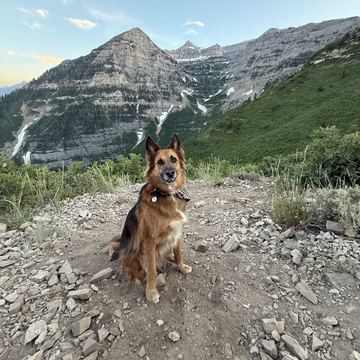
Sasha is my dog, a German Shepherd and Border Collie mix. She was my co-pilot on the 2025 road trip (§5).
Annual
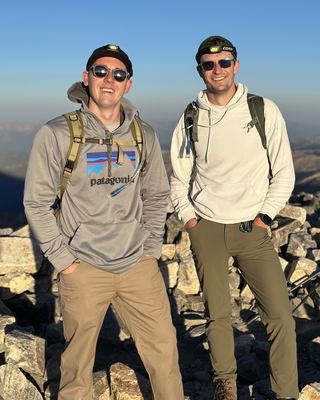
Once a year a buddy and I go hiking in Colorado.
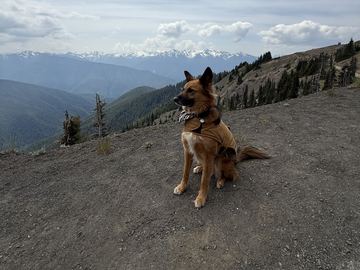
From June to August 2025, Sasha and I drove about 18,400 miles through all 48 contiguous states. The map, the numbers, and the stories are at A Whittle Wandering.
Email is best. You can also book a 30-minute call, or find me on LinkedIn.
End of JW-1.